Easiest day
The north
Dunes, crater and ferry
Read moreLocate your stop
The quick version
The Fuerteventura tourist attractions to see first are the Corralejo dunes, Lobos islet, Betancuria, the Ajuy caves and Cofete beach, and only Cofete really needs a tour.
The sights in brief
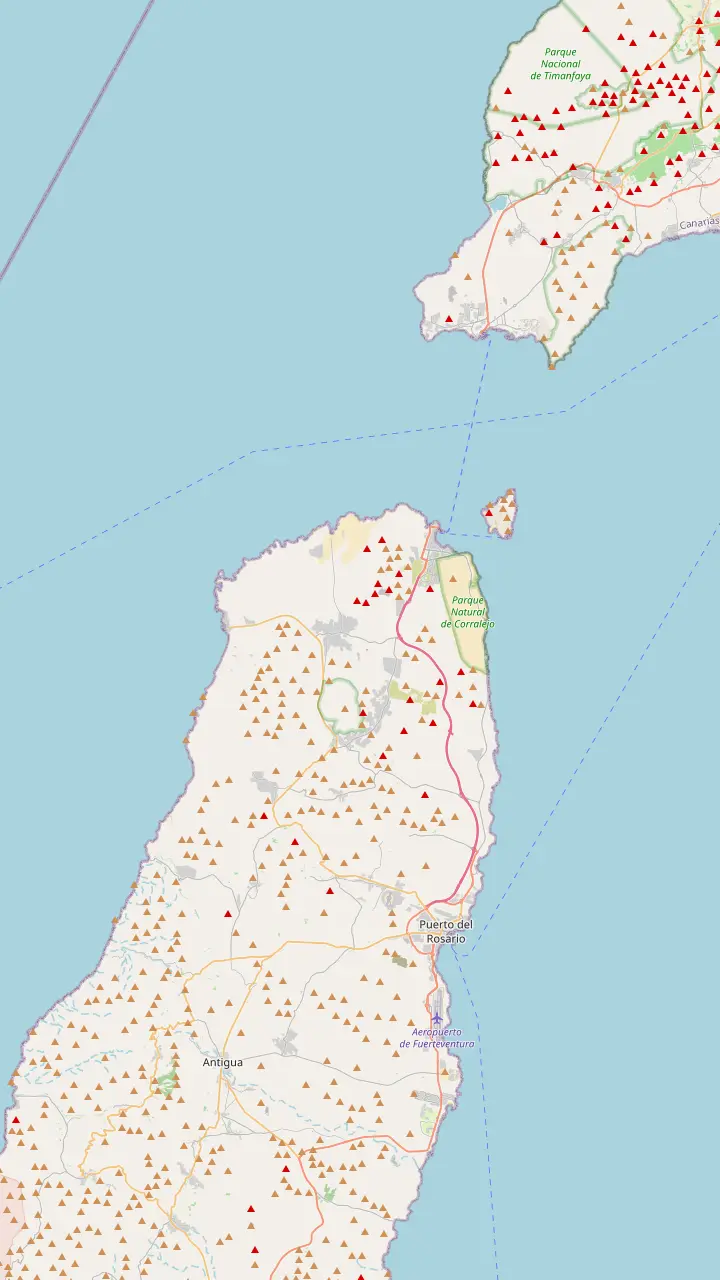
Map of 26 stops
Tap a route first, then a pin or stop, for its note and Google Maps.
The biggest dune spread in the Canary Islands lies beside Corralejo, inside a natural park that measures 10.5 kilometres at its longest.
Google MapsThe islet is a short boat ride from Corralejo, has no road and takes its name from the sea lions that once lived on its shore.
Google MapsPopcorn beach is really El Hierro beach in La Oliva, and its white pieces are rhodoliths of calcareous algae that must stay on the shore.
Google MapsThe crater of Calderon Hondo has a circular walk of 5 km with a viewpoint at the top.
Google MapsThe Toston lighthouse has three towers built in 1897, 1955 and 1986, and the shore beneath it is known for sunsets.
Google MapsTindaya rises 400 metres above a flat plain and carries more than 300 foot-shaped engravings at its base.
Google MapsThe Colonels House stands on the edge of La Oliva, the village with the most cafes per capita on the island.
Google Maps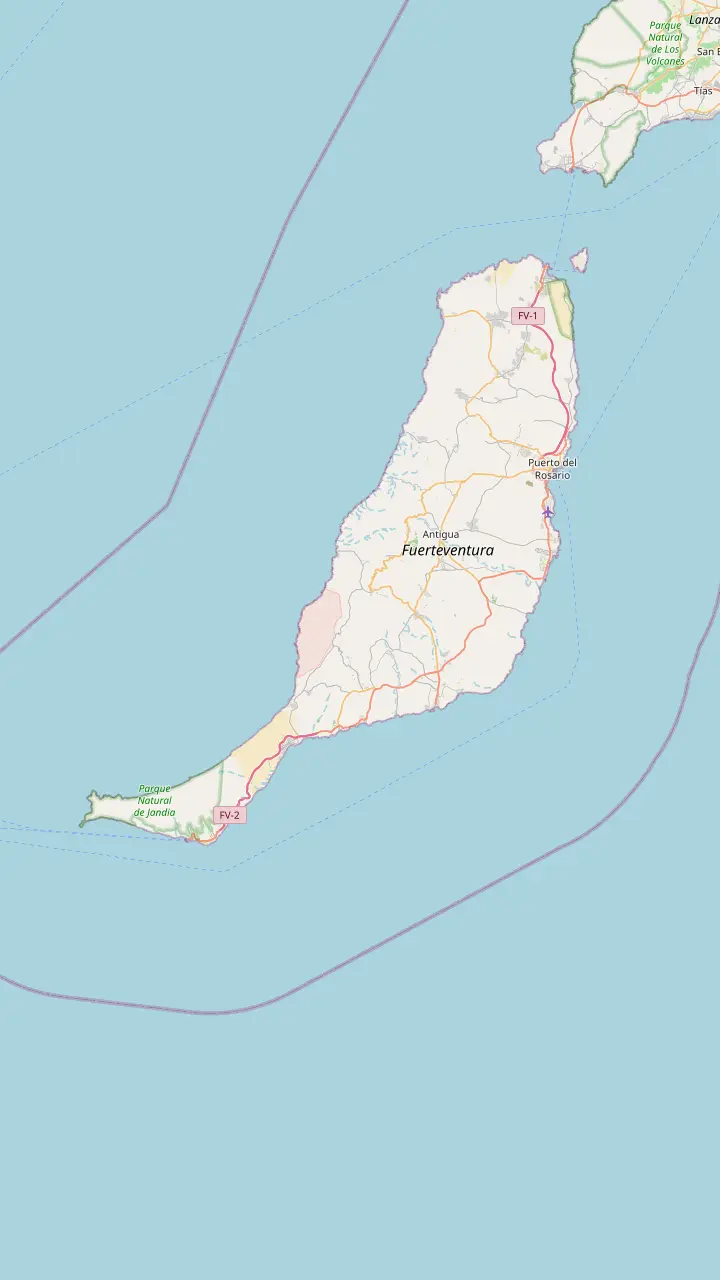
A living museum with seven restored houses where artisans work in view of visitors.
Google MapsThe old capital was founded in 1404 inland to keep pirates away and has been a heritage site since 1979.
Google MapsThe cheese museum in the Antigua mill complex has a tasting room and covers the Majorero designation of origin.
Google MapsThe museum sits beside salt fields that still work and that are more than 400 years old.
Google MapsThe caves at Ajuy hold the oldest rocks in the Canary Islands, formed between 100 and 150 million years ago.
Google MapsOasis Wildlife is the only zoo and botanical park on the island, and its camel safari tickets tend to sell out.
Google MapsThe lighthouse stands just over 100 kilometres from Morocco, the point of the Canary Islands closest to Africa.
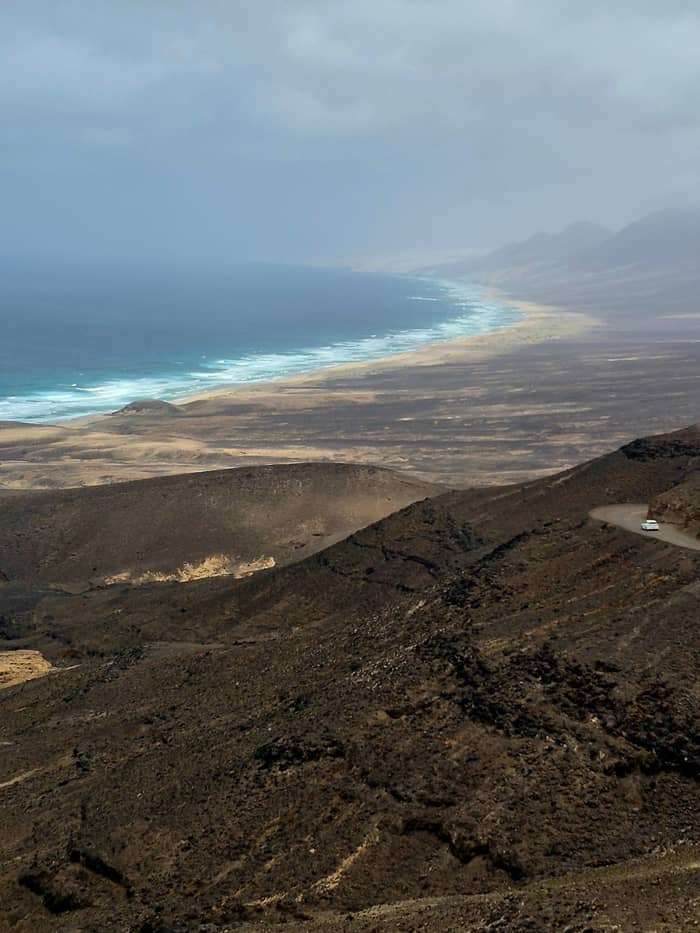
Google MapsCofete beach runs for 12 kilometers and is reached on a road of dirt and rocks.
Google MapsMorro Jable is the town where the Cofete road begins, and the bus line to Cofete starts here.
Google Maps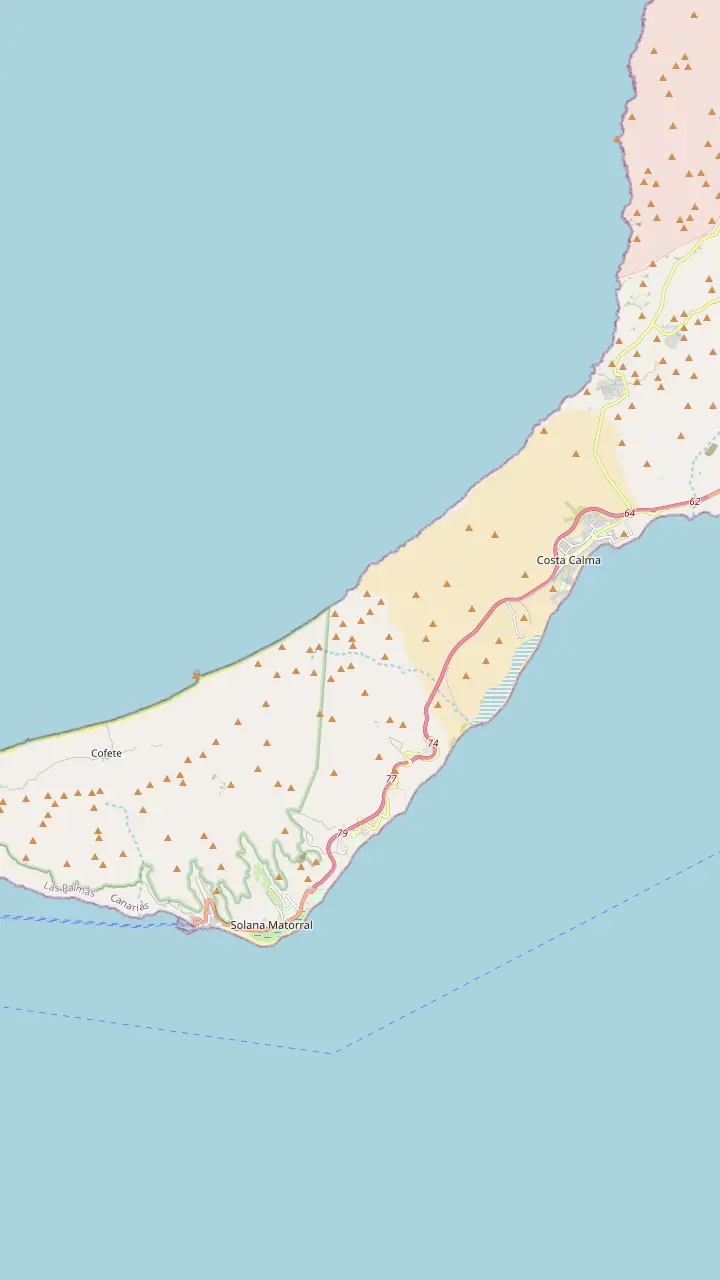
Morro Jable is the town where the Cofete road begins, and the bus line to Cofete starts here.
Google MapsThe Canarios viewpoint gives a panorama of Cofete beach and the highest mountains of the island.
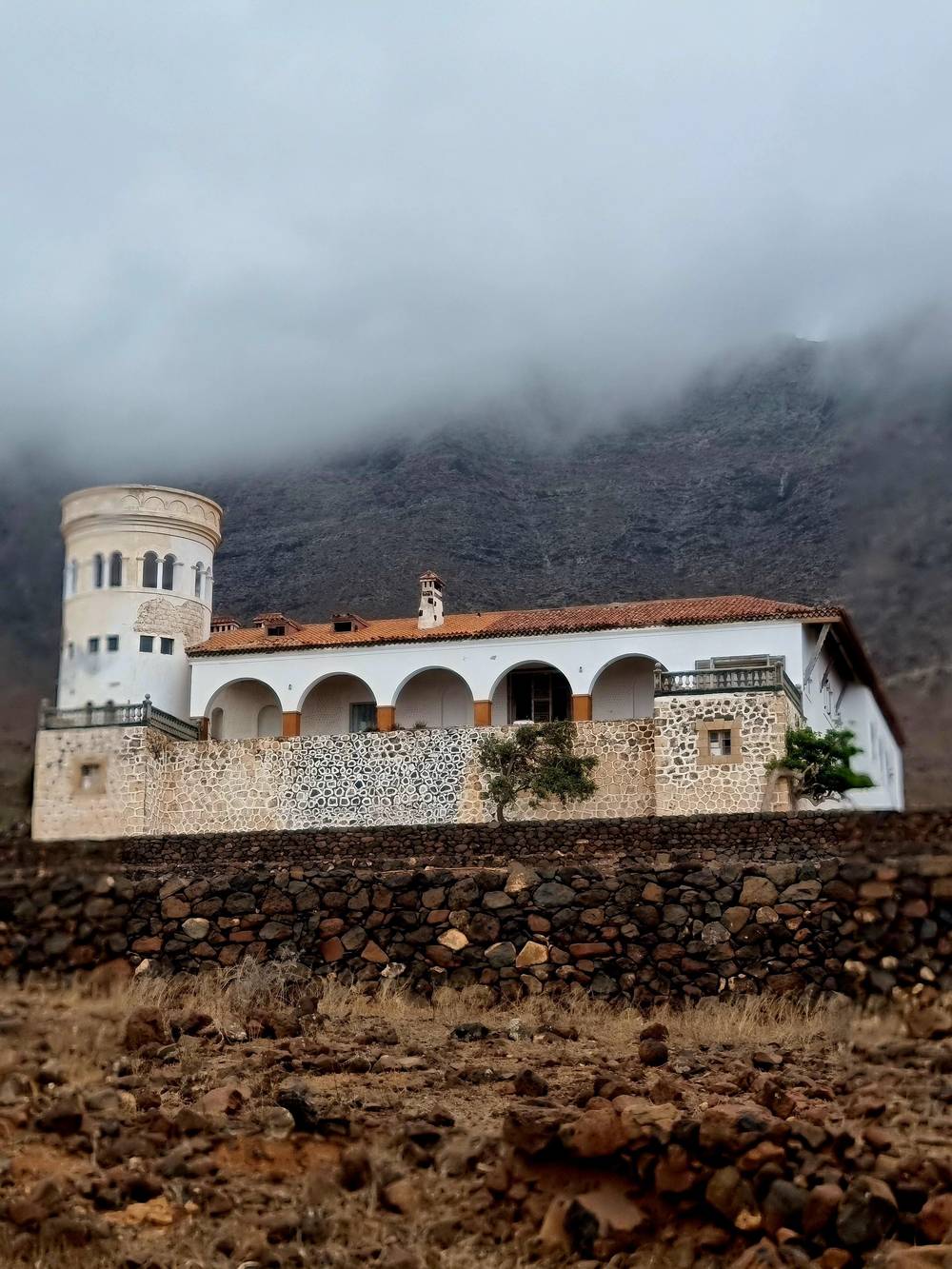
Google MapsCasa Winter stands in the foothills above Cofete, and the stories of a Nazi base around it are unconfirmed.
Google MapsCofete beach runs for 12 kilometers and is reached on a road of dirt and rocks.
Google MapsThe cemetery by the sea is protected as a site of cultural interest, and the dead were once carried here on camels.
Google MapsThe old stone wall of La Pared once closed the isthmus of Jandia from coast to coast.
Google Maps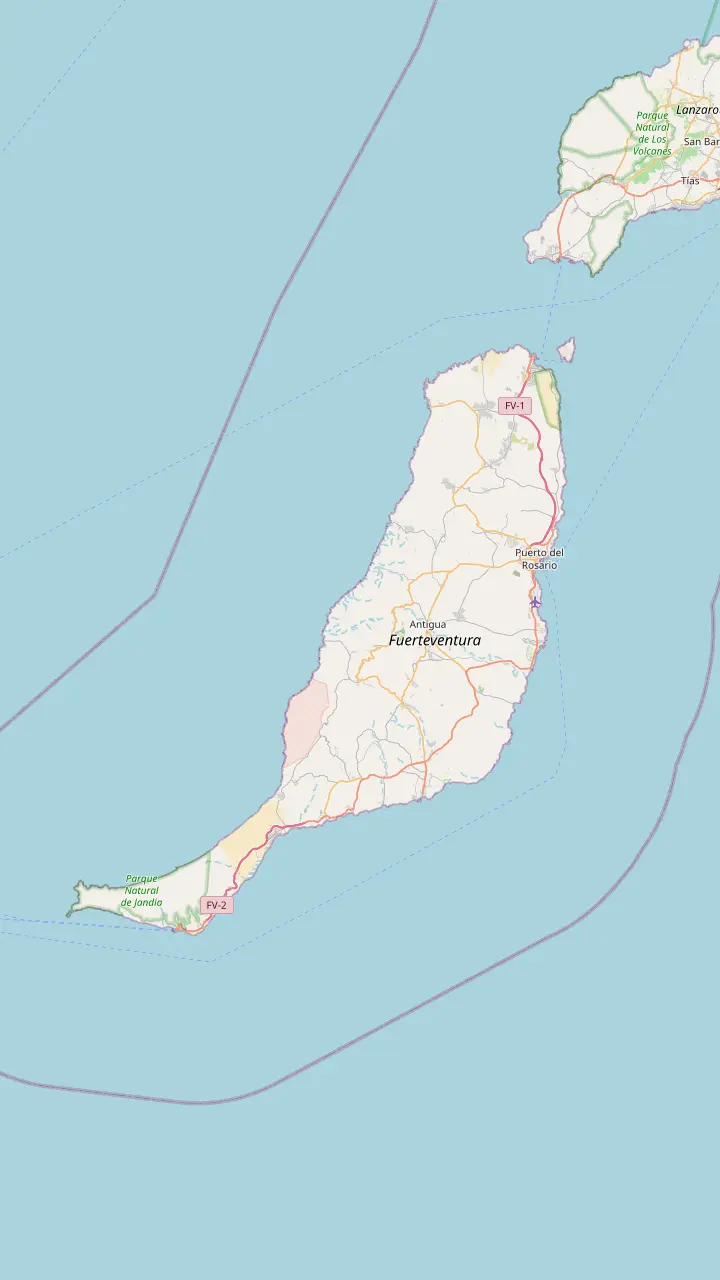
The ferry port for Lobos and the gateway to the dunes, the airport lies 39 km away.
Google MapsA fishing village on the north-west coast with lagoons sheltered by reefs.
Google MapsThe island capital, a harbour town on the east coast.
Google MapsThe airport lies 39 km from Corralejo, 84 km from Morro Jable and 8 km from Caleta de Fuste.
Google MapsA resort 8 km from the airport with a salt museum nearby.
Google MapsA resort with more than 10 kilometers of beach and a calm shore, 65 km from the airport.
Google MapsMorro Jable is the town where the Cofete road begins, and the bus line to Cofete starts here.
Google MapsMap data by © OpenStreetMap contributors
The dunes, the islet, the long wild beach, the old capital and the caves in one plan, with a map, what each sight asks of you and which ones are worth a guide.
Editorial team, fuerteventuratour.click · Updated November 23, 2026 · Takes 7 min
Quick look
The north is where most first visits begin, because the best-known Fuerteventura tourist attractions sit close together here. Corralejo Natural Park measures 2.5 by 10.5 kilometres, and beside the resort town spreads the largest dune field in all of the archipelago.9,1 The FV-1 road runs past the park, but you must park and explore on foot, so bring water, a hat and footwear that can take a lot of sand.10
The same park has a second face. Walking boots are needed to climb the 300 metres up the Montaña Roja volcano, which gives the view across the water towards Lanzarote.11 A little further inland the Calderón Hondo crater has a circular walk of 5 km with an elevation gain of 160 m, suited to all abilities and lasting about an hour and a half.12 The viewpoint at the top stands at 278 metres.13 There is no mobile coverage on the route, so tell someone where you are going.14
Lobos is the third piece of the northern day. The islet is 4.5 square kilometres, 127 metres high and has not a single road, and a ferry hop of 15 minutes from the north tip of the main island gets you there.15,2 You reach it by a small ferry from the port of Corralejo, and the walks lead to the La Montaña crater, La Calera beach and the lighthouse.16,17 Reserve a table at the sole restaurant, since visitor numbers on the islet are capped to protect its nature.18
By effort
| Sight | Region | Effort | What it gives |
|---|---|---|---|
| Corralejo dunes | North | Easy on foot | The biggest dune spread of the islands1 |
| Lobos islet | North | Ferry, then walks | A road-free islet and clear water15 |
| Calderón Hondo | North | 5 km circuit | A crater and a viewpoint at 278 metres12,13 |
| Tindaya | North-west | A path up the ridge | More than 300 engravings26 |
| Betancuria | Centre | Walk the town | A town founded in 14045 |
| Ajuy caves | West | Short walk | Rocks of 100 to 150 million years7 |
| Cofete | South-west | 4x4 or a tour8 | 12 kilometers of wild beach3 |
Effort is how you reach the sight, as the tourism pages describe it. Prices are not listed here, because most of these places have no ticket.8
If you want unusual things to do in Fuerteventura, leave the beach towns and head west and south from La Oliva. Tindaya is a solitary mountain 400 metres high, and the original inhabitants held it sacred, which the more than 300 foot-shaped engravings at its base still show.19,25,26 A path on the southwest ridge allows visitors to walk up, and the tourism site calls it a vantage point at sunset.27,28 It is quiet, free of queues and very different from the beaches.
La Oliva itself rewards a slow hour, and the walk between its old houses needs no ticket. The village has the most cafes, restaurants and sweetshops per capita on the island, and it holds the Casa de los Coroneles, a stately home of the 17th century.20,29 A short drive away the Popcorn beach is really El Hierro beach, and its white pieces are rhodoliths, made of calcareous algae that grow one millimetre a year.30,31
Leave those pieces where they lie. The tourism site insists that visitors must never snap off or pocket the white coral on the shore.32 On the west coast the Tostón lighthouse is another gentle stop. Its towers were built in 1897, 1955 and 1986, and the shore beneath it is known for sunsets and lagoons protected by reefs that offer ideal swimming for the family.33,34 Together these stops make a relaxed day that needs no booking.
Heights
The middle of the island is the quietest part, and it is where the history sits. Jean de Bethencourt, a Norman knight, founded Betancuria in 1404, and he placed it inland as a defence against pirate attacks.5 It has been recognised as a heritage site since 1979, and the buildings worth a look are the church of Santa María de la Concepción and the old Franciscan convent of San Buenaventura.6,23 Around it lies Betancuria Rural Park, the largest natural area of the island and the home of the oldest rocks of all the Canary Islands.36
North of there, La Alcogida ecomuseum shows how the farming families lived. It has seven separate houses in seven architecture styles, and it is a living museum where visitors can watch artisans at work and talk to them.21,39 It is a good stop for children and for anyone who wants to see the island as its people worked it. Close by stands the Tefía mill, one of the 23 mills declared an Asset of Cultural Interest, where grain was ground to make gofio, the Canarian flour.40,22
Further east the cheese museum in Antigua and the Salt Museum near Caleta de Fuste make an easy pair of indoor stops for a windy afternoon. The salt operation is more than 400 years old, and visitors can walk through the original salt fields, which still work.41,42 The cheese museum has more than 500 square metres of exhibition space and a tasting room.43,44 None of these places is spectacular on its own, yet together they explain how people lived on a dry island better than any beach does.
Pick your sights
Name the thing you care about most and the sight and the way of going appear.
If I want sand and a boat
Corralejo and Lobos
The dunes lie beside the resort and the ferry leaves from its port.1,16
If I want something nobody has seen
Tindaya at sunset
A path leads up the southwest ridge, and the engravings sit at the base.27,26
If I want history without effort
Betancuria
The town has been a heritage site since 1979, with its church and convent.6,23
If I want the wildest beach
Cofete with a guide
The road is dirt and rocks, and a jeep tour starts from €66.4
If I travel with young children
Oasis Wildlife
It is the only zoo of the island, with shows and a camel route.37,38
On the west coast the Ajuy caves are the best geology lesson in the Canary Islands. The tourism site calls them the oldest rocks of the archipelago, sedimentary layers formed in the deep ocean during the Cretaceous, between 100 and 150 million years ago.47,7 The island itself formed 30 million years ago, long after those rocks were laid down.64 Nearby you can see a fossilized dune and old lime kilns close to the ocean.65
Ajuy is also a pleasant place to eat. It is a fishing village of a few dozen houses with a dark sandy beach and restaurants serving fresh fish, and the caves fit a morning with lunch by the water.24 Stay on the marked paths wherever you walk in the interior. The park guidance asks visitors to avoid leaving marked paths, which damages the environment and may put you and your companions at risk, and it takes nothing from the view.63
In the south the family choice is Oasis Wildlife, the only zoo and botanical park of the island. Its shows include reptiles, parrots, birds of prey and sea lions, and the camel safari tickets tend to sell out, so visitors are advised to buy on arrival.37,38,48 An entry ticket starts from €42. Check the opening window before you travel: the listing allows entry at any hour from 9:00 AM, and the window closes at 5:00 PM, and a family with small children will want the morning.
Price the day
Key in the size of your group to see the starting fares of the tours that reach these sights.
Compare 4 choices
Key in the size of your group to see the starting fares of the tours that reach these sights.
≈
View≈
View≈
View≈
ViewStarting prices on GetYourGuide, exchanged at the ECB reference rate. The booking page gives the exact price.
North to south
Corralejo
Walk the biggest dune spread in the Canary Islands, then take the small ferry to Lobos.1,16
La Oliva area
Look at the 400 metre mountain with its engravings, then eat in the village with the most cafes per capita.19,20
Tefía
Visit the ecomuseum with its seven houses and the mill that ground gofio.21,22
Betancuria
Walk the town founded in 1404 and see the church and the Franciscan convent.5,23
Ajuy
See rocks formed 100 to 150 million years ago and eat fresh fish in the village.7,24
Jandía
Finish on the wild beach of 12 kilometers, with a guide if you want the story.3
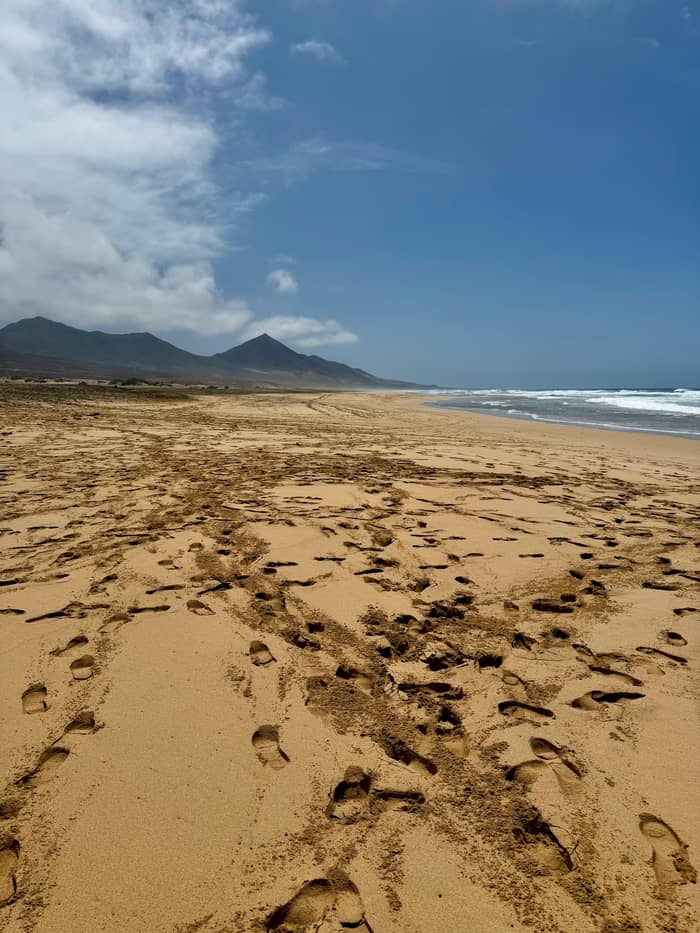
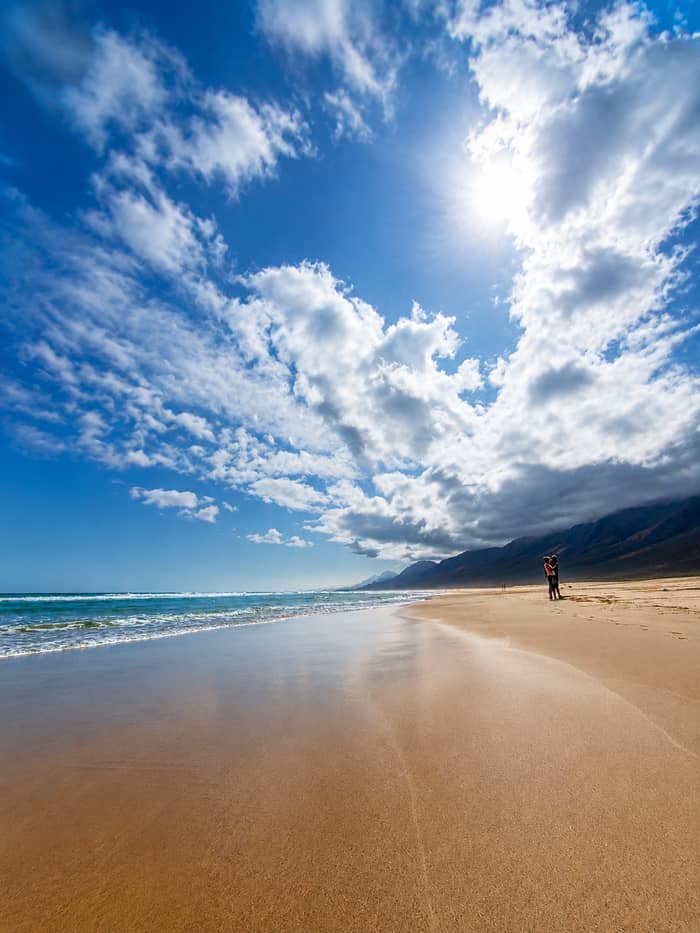
Cofete is the sight that most visitors remember. The beach runs for 12 kilometers where the sand changes from pale blond to ochre, in a protected park, with the mountains of Jandía behind it.3 Zarza peak reaches 807 meters, the highest point of the park, and the endemic cardón plant of Jandía grows within it.35,66 There are few houses, no paved roads and the need for a 4x4, which says everything about the place.8
The access is the whole question. The dirt stretch is 8.5 kilometres long and has difficult sections.4 Another page of the same tourism site gives the earthen track as approximately 10 kilometres, so treat the figure as a guide and not a promise.67 Either way, the Atlantic here is wild, and the tourism site says it should be treated with the utmost respect, so do not plan a swim.68 The jeep-with-a-guide option is covered further down.
What else is there? A marine cemetery sits by the sea, and the dead were once carried here on camels in a procession of about 40 km.55 The mansion above the beach, Casa Winter, comes with stories that the tourism site calls unconfirmed.53 Its real story is told on the page about Villa Winter. A listing for the Cofete jeep safari starts from €66 and gives 40 minutes of free time at the beach.
Video
Toucan Travellers on YouTube · Nothing is fetched until you hit play.
the white coral on the shore should never be broken up, much less put into pockets and taken home
Before you go
What to see and do in Fuerteventura is, in large part, free, because many of the best things cost nothing: the Corralejo dunes, Calderón Hondo, the Tindaya path, the Ajuy beach and the walks on Lobos are all on foot, and the Island Network of Trails has prepared and protects 255 kilometers of trails.69 Prices for entries and boats change, so check each current price on its own page before you go. A good plan is to do the walking and beaches alone and book a guide only where the access is hard or the story matters.
A tour earns its fare only in a few places. The first is Cofete, because of the dirt road and the guide who explains Winter and the arch of mountains.8 The second is a whole-island day, such as the panoramic minibus tour from €66, which stops at the dunes, Sotavento, Ajuy and Betancuria without any driving on your side. The third is the north from the south, for a guest who sleeps in Jandía: the wild north tour starts from €79.
At night the island has clear skies. The tourism site credits thin light pollution, the island's position and a subtropical climate tempered by the ocean and the trade winds, and it names the Tefía observatory as the main astronomical reference point.70,71 A guided stargazing tour at Calderón Hondo starts from €46, but the listing makes no refund when weather hides the stars. Add it only when the forecast is settled.
FAQ
Sources
Planning Cofete or a boat day on Fuerteventura? Ask a real person here.